
ERP vs Utility Billing Software: What's the difference?
Can an ERP system handle utility billing? Short answer: Yes. But most ERP systems were not designed specifically for utility billing. Enterprise Resource Planning (ERP) software such as Microsoft Dynamics, SAP, Oracle, Unit4 and NetSuite is built to manage core business functions including finance, procurement, HR and asset management.
While many ERP systems offer billing capabilities, heat networks and utility providers often require additional functionality that goes beyond traditional invoicing.
Examples include:
• Meter data collection and validation
• Consumption-based billing
• Tariff & product management
• Customer self-service portals
• Payment collections
• Regulatory reporting
• Utility-specific workflows
What is utility billing software?
Utility billing software is purpose-built to manage the complete meter-to-cash process.
For heat network operators, district heating providers and housing associations, this typically includes:
✔️ Meter reading collection
✔️ Consumption calculations
✔️ Tariff configuration
✔️ Automated invoice generation
✔️ Customer account management
✔️ Debt management
✔️ Regulatory compliance
✔️ Customer communications
Unlike a general-purpose ERP, utility billing software is designed around the operational realities of energy billing.
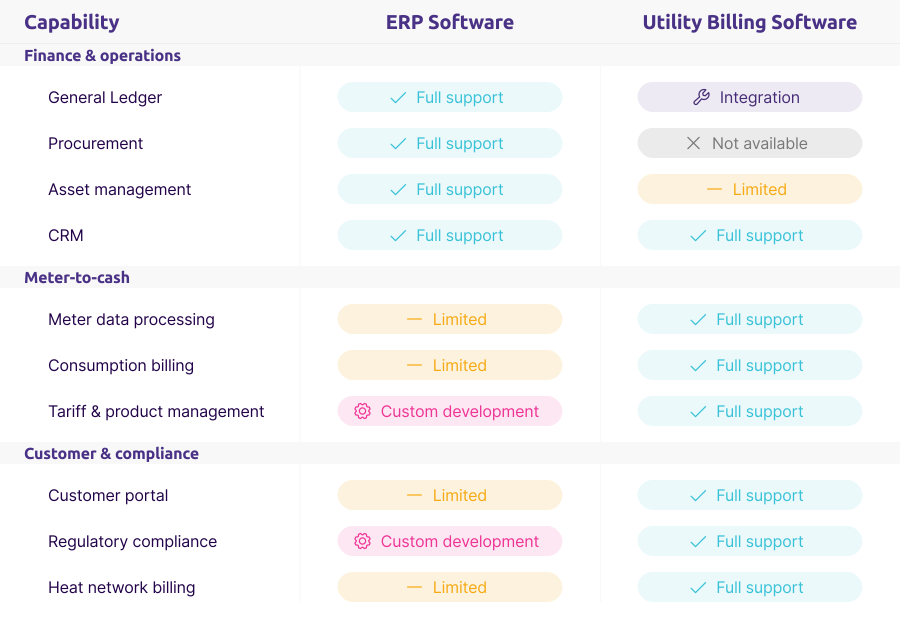
ERP vs Utility Billing Software: key differences
Why heat network billing is different
Heat network billing is fundamentally different from traditional invoicing.
Operators must manage:
👉 Meter-Based Charges
Invoices are calculated using actual consumption data collected from heat meters.
👉 Complex Tariffs
Many heat networks include:
- Fixed standing charges
- Variable energy charges
- Service fees
- Multiple customer classes
👉 Consumer Protection Requirements
Across the Europe and the UK, regulatory expectations are increasing around:
- Billing transparency
- Cost allocation
- Data accuracy
- Customer service standards
👉 Large Volumes of Data
A single network can generate thousands of meter readings every month.
This data must be validated, processed and converted into accurate customer invoices.
Most ERP systems were never designed to perform these specialised functions.
Why Organisations Struggle With ERP-Based Billing
Many organisations initially attempt to build utility billing functionality into their ERP.
Common challenges include:
👉 High Customisation Costs
Every tariff change or process adjustment may require consultant support.
👉 Long Implementation Timelines
Projects often take months or years before delivering value.
👉 Spreadsheet Dependency
Many teams continue to rely on Excel for tariff calculations and billing checks.
👉 Regulatory Change
New regulations often trigger additional development projects and costs.
👉 Knowledge Risk
Critical billing processes become dependent on a small number of ERP specialists.
Why heat suppliers use Zero Friction alongside their ERP
Zero Friction is not designed to replace your ERP.
Instead, it complements existing systems by handling utility-specific processes.
ERP manages:
✔️ Finance
✔️ Accounting
✔️ Procurement
✔️ Corporate reporting
Zero Friction manages:
✔️ Meter data
✔️ Tariffs
✔️ Billing
✔️ Customer communications
✔️ Payment processes
✔️ Customer portals
✔️ Regulatory workflows
This approach allows organisations to modernise billing without replacing core business systems.
Benefits of Dedicated Utility Billing Software
Organisations typically adopt utility billing software to achieve:
👉 Faster Billing Cycles
Reduce manual intervention and automate invoice generation. Secure a faster first-time-right-invoice.
👉 Lower Operational Costs
Eliminate spreadsheet-driven processes and repetitive administrative work.
👉 Improved Customer Experience
Provide self-service capabilities and transparent billing information.
👉 Greater Flexibility
Configure new tariffs and services without software development projects.
👉 Better Regulatory Readiness
Adapt quickly to changing industry requirements.
Frequently asked questions
💡 Should a heat supplier replace its ERP?
Usually not.
Most organisations retain their ERP for financial and operational management while using specialist utility billing software for meter-to-cash processes.
💡 Can Microsoft Dynamics be used for utility billing?
Yes, but many organisations require significant customisation or third-party solutions to support utility-specific requirements such as tariff management, meter data processing and consumption-based billing.
💡 Is SAP suitable for heat network billing?
SAP can support billing processes, but many heat suppliers use dedicated utility billing platforms to reduce complexity and accelerate implementation.
💡 What is the difference between ERP software and utility billing software?
ERP software manages broad business operations. Utility billing software focuses on consumption data, tariffs, invoicing, collections and customer management for utilities and heat suppliers.
💡 What software do heat network operators use?
Many operators use a combination of ERP software and specialist utility billing platforms to manage billing, customer service and regulatory compliance.
Why heat suppliers choose Zero Friction
Zero Friction is purpose-built for utility billing.
Rather than adapting a generic ERP to perform specialist billing functions, organisations can use a platform designed specifically for:
✅ Heat networks
✅ District heating
✅ District cooling
✅ Utility billing
✅ Customer engagement
✅ Regulatory compliance
The result is faster implementation, lower operational complexity and a future-ready billing operation.
You might also like...

Why Belgium still thinks too individually about collective heat
The energy transition is well underway. Gas has to go, CO₂ has to come down, and homes need to be heated more sustainably. But if you look at how we are tackling this in Belgium, one thing stands out: we are trying to solve a collective problem with individual solutions. And that is where the friction lies.
District heating billing software: Should you build or buy?
As heat networks grow, managing consumption data, billing, and customer interactions becomes critical. Many heat network operators still rely on Excel, but spreadsheets quickly become inefficient as networks expand. Errors, slow invoicing, and poor customer visibility limit growth and compliance.
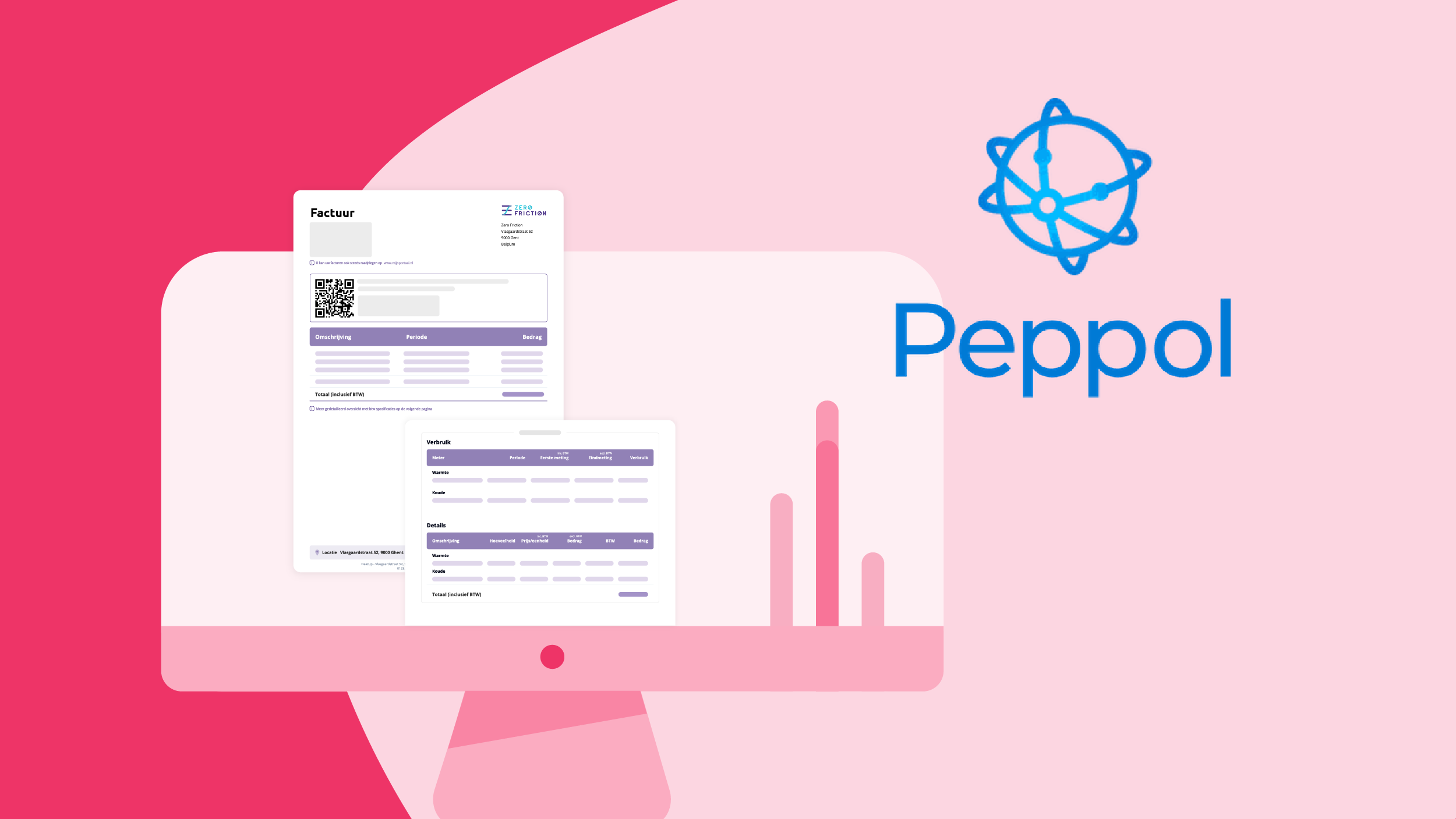
Peppol e-invoicing: what is it, who is it for, and how does Zero Friction make it super easy-breezy?
Digitalization in the energy world is moving at lightning speed. More and more heat suppliers are switching to e-invoicing via Peppol. But… what exactly is Peppol? And how do we make sure you hardly need to worry about it? In this blog, we'll explain it simply. 😉
Stay tuned
Subscribe to our newsletter and get quarterly updated on market news, our new customers, product updates and much more!
